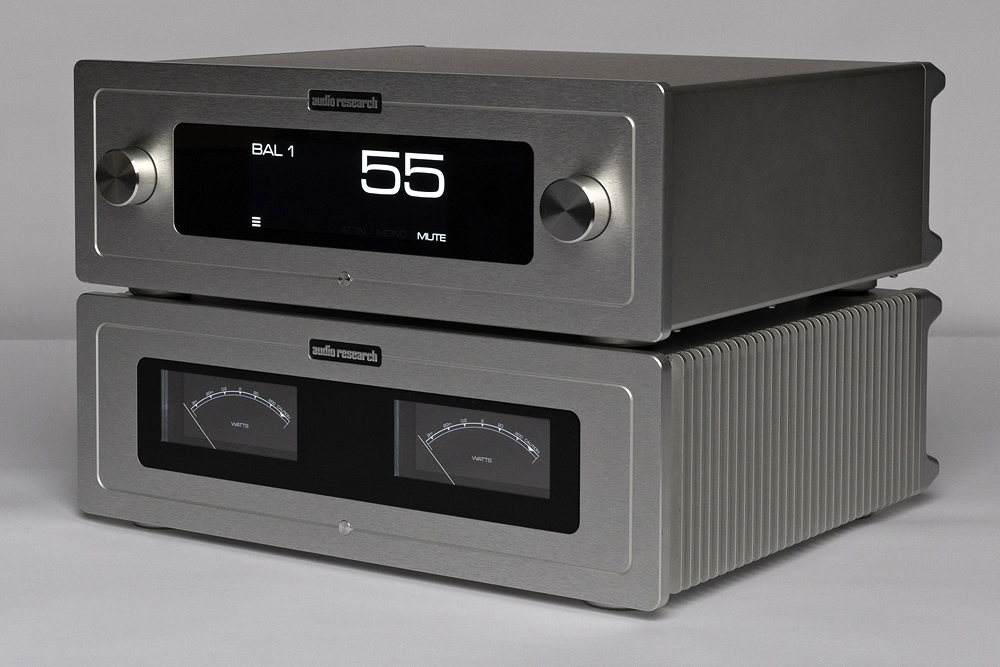
When iconic American brand Audio Research launches a new component, the high-end audio world pays attention. New releases from the company have always been a superbly balanced mix of tradition and innovative advancement. A merger of established amplification circuitry that tips the hat to modernisation. Valves and solid-state? You got it. In this review, the company’s newest products, the LS-2 preamplifier and S-200 power amplifier, combine the tech to provide what is, potentially, a Goldilocks formula. But really, how did they perform? Well, read on…
Don’t Hold Back
When the Australian distributor for Audio Research, Synergy Audio, asked if I wanted to review the new LS-2 valve preamplifier and S-200 stereo power amplifier as a combo, I had to bite my tongue and pinch my leg to stop myself from yelling “YEAH BABY!”. Concealing my excitement, in a rigidly professional way, I muttered, “Umm… yep, why not, I can do that”. You don’t want to come across too eager, right?
Especially when I’ve long believed that a good valve preamp feeding an equally capable solid-state amplifier can form an invincible partnership that’s been tempered like an enduring sword forged by the most powerful of Norse gods. Or really clever engineers… In fact, I employ that very same mix of technologies in my reference system and have done so almost since day dot. Valves bring beauty, and tone, and openness, while solid-state delivers these qualities to your loudspeakers with pristine precision. Unconstrained and super-faithfully.
So, the LS-2 operates in Class-A on a zero-feedback circuit and is a two-valve design based on the reliable 6H30 dual-triode. A Russian military grade design, the 6H30 is sometimes referred to as the ‘Super Tube’, a denomination which came about because of its excellent reliability, high transconductance coupled to low plate resistance, and high current capabilities. Sonically, the 6H30 is said to approach the neutrality of solid-state technology.
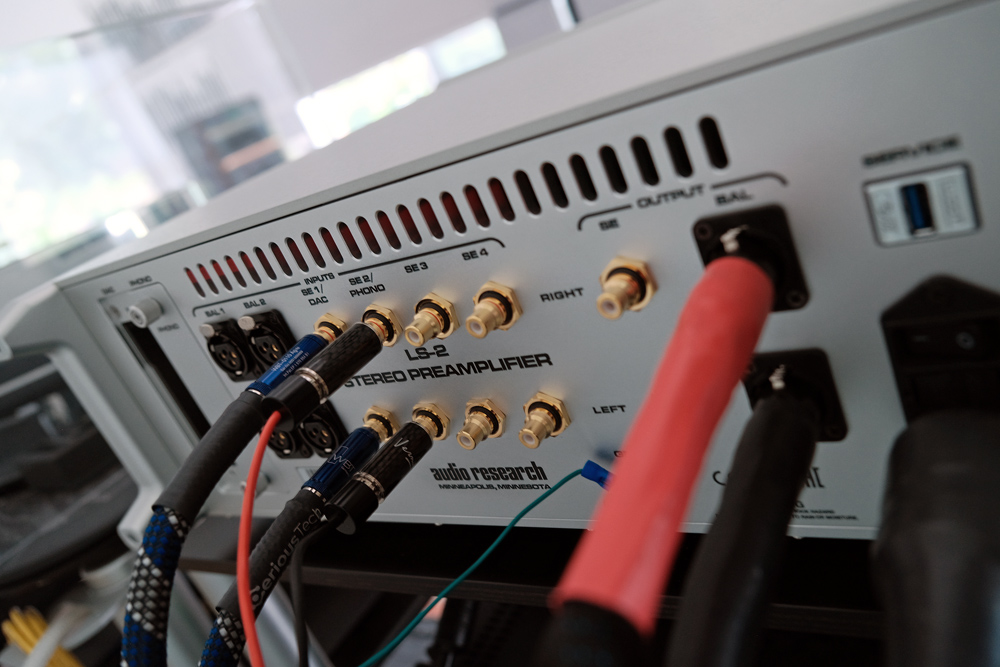
Rear panel connectivity includes two balanced XLR and four unbalanced/single-ended RCA input sockets (tethered to a switch which toggles between the modes), balanced XLR and unbalanced RCA outputs, and an USB-A port for firmware updates and service access. Two module sockets are provided for optional expansion boards. One is for a phono stage (there’s a ground post on the rear of the chassis) and the other accepts a digital-to-analogue converter board. The review unit arrived with the phono board installed, while the DAC module slot was blank. RCA Input 2 is setup to become the phono input when the phono stage module is installed. Finally, the LS-2 has a standard IEC socket with fuse and on/off switch.
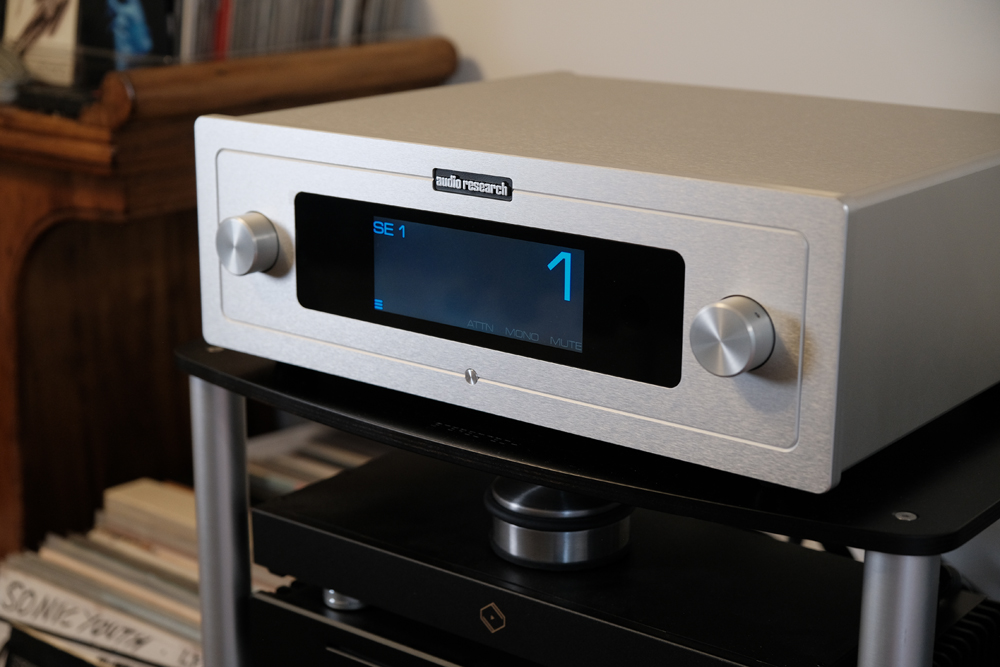
Like most, if not all, of Audio Research’s valve-based preamplifiers, the LS-2 could pass for a solid-state unit based on its chassis design. There are no valves popping-up through the top panel, no warm amber glow teasing at the LS-2’s innards. An added touch of modernity comes via the high quality front panel touchscreen display which dominates the unit’s fascia. It serves as a menu navigator, switcher/function control and status information display.
The menu options are extensive and allow customisation for Mono, Stereo, and Processor Loop activation, Balance L/R adjustment, input naming, firmware update options, and more. Two large rotary knobs flank the display, with the left one controlling input switching and the one on the right for volume setting. Said display can be adjusted for brightness level and there’s a wide selection of colours to match your mood or even the display colour of other components in the system.
The supplied remote control is a metal construction, save for the top gloss black plastic surface which is populated with small grey buttons. Volume adjustment can be made in single incremental steps or, by holding the volume up or down buttons, via an accelerated mode for quick changes.
Here’s something I’ve never come across before: there are no screw/bolt fasteners or latches/covers on the remote… how the Hell do you change batteries?! Well, Audio Research provides a plastic suction cup which attaches to a vacant spot on the gloss fascia. With a bit of force, you pull the suction cup up and lift the fascia off the metal casing in order to change the batteries. Quirky… and yeah, don’t lose that cup.
The LS-2’s key specifications include a frequency response spanning from 0.3 dB to 40 kHz (both at -0.3 dB) at rated output, balanced 100 kohms. Gain is 12 dB via both XLR and RCA output options, output impedance is 10 ohms balanced and 25 ohms single-ended, while input impedance is 25 kohms both with balanced XLR and single-ended RCA. Total Harmonic Distortion + Noise (THD+N) is given as under 0.03% at 2V RMS balanced output (10 Hz to 80 kHz unweighted), Noise is at -77 dBV at maximum volume (99 on display), and Crosstalk is -76 dB.
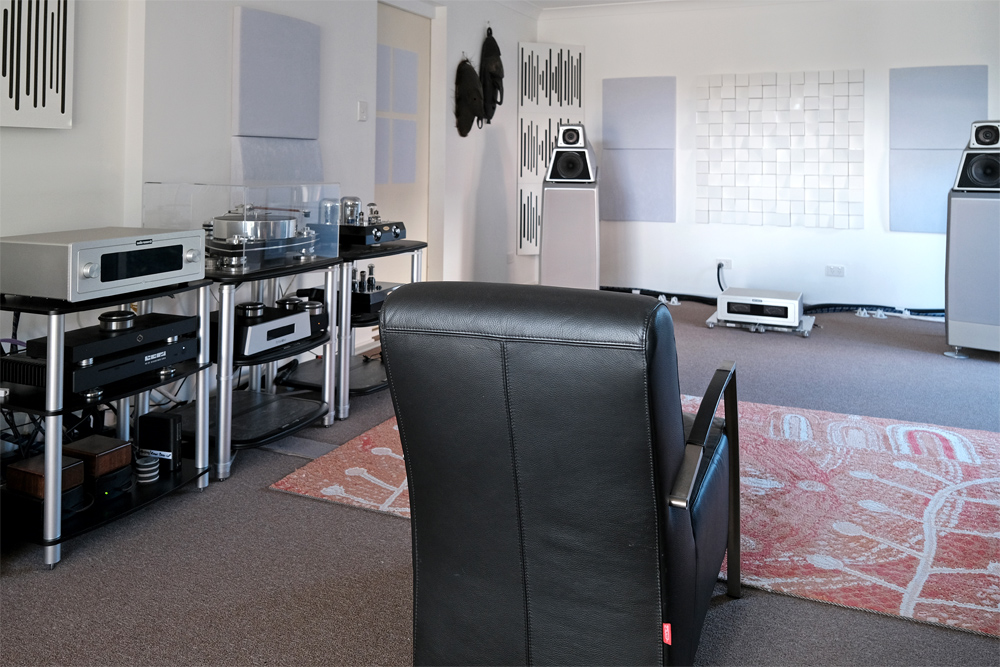
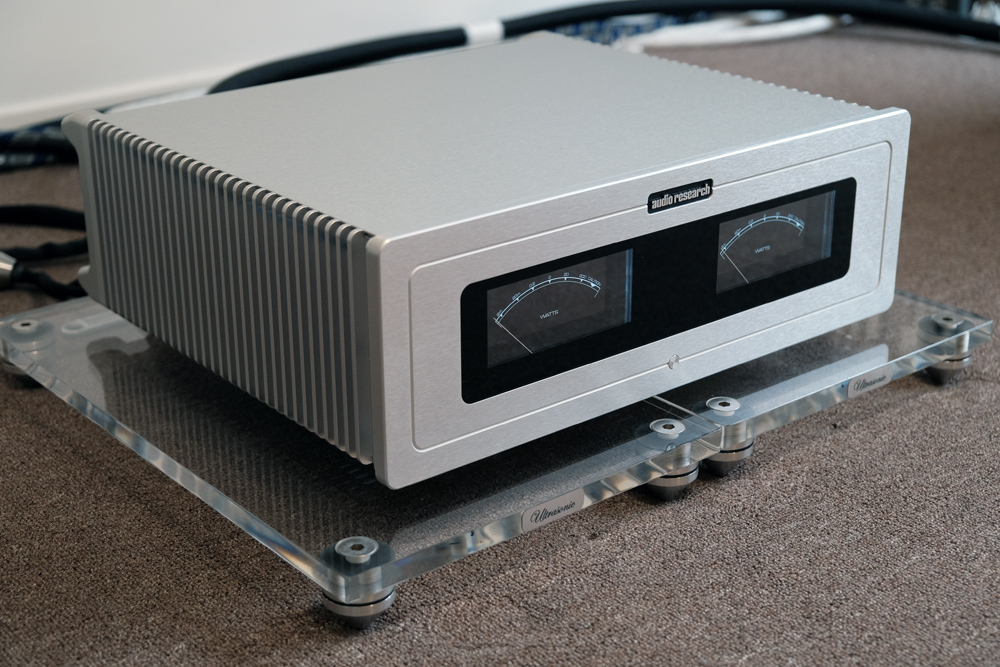
The S-200 stereo power amplifier is a minimalist design of identical dimensions as the LS-2. So, they look made for each other whether stacked on top of one another or separated on an audio rack. In my setup, the LS-2 took pride of place on the top shelf of my SGR Audio Statement rack while the S-200 sat on a spiked acrylic amplifier platform resting between my Wilson Audio Alexia V speakers.
The S-200 is a solid-state Class-A/B fully balanced design featuring dual-mono circuitry and, as per its nomenclature, is rated at 200 watts per channel into 8 ohms. Two large toroidal transformers and capacitor bank form the “muscular” power supply section. Audio Research chose bipolar transistors for the output devices, preferring them over MOSFETs for their “purity, transparency, and better dynamics”.
Audio Research proprietor Valerio Acora provided me with some more basic insights in a communication just prior to publication “The transformers are fully custom-designed and wound to our own specifications and tolerances. All transistors are tightly matched, and the power supply incorporates a carefully selected combination of electrolytic capacitors with film bypassing. A significant portion of development was spent evaluating not only component types, but specific manufacturers, values, and interactions, ultimately arriving at a balance that avoids sounding overly soft or overly analytical, while maintaining musical coherence.”
As noted above, the S-200 is a 200 watts per channel amplifier into 8 ohms, said to double down to 400 watts-a-side into 4 ohms. Frequency Response spans from 20 Hz to 20 kHz at +/- 0.1dB and Damping Factor is stated as 300 from 20 Hz to 1 kHz. Total Harmonic Distortion (THD) is said to be under 0.1% from 0.25 watts to rated output into 8 ohms at 1 kHz, with input impedance given as 100 kohms both for balanced and single-ended, and Noise is 100 dB.
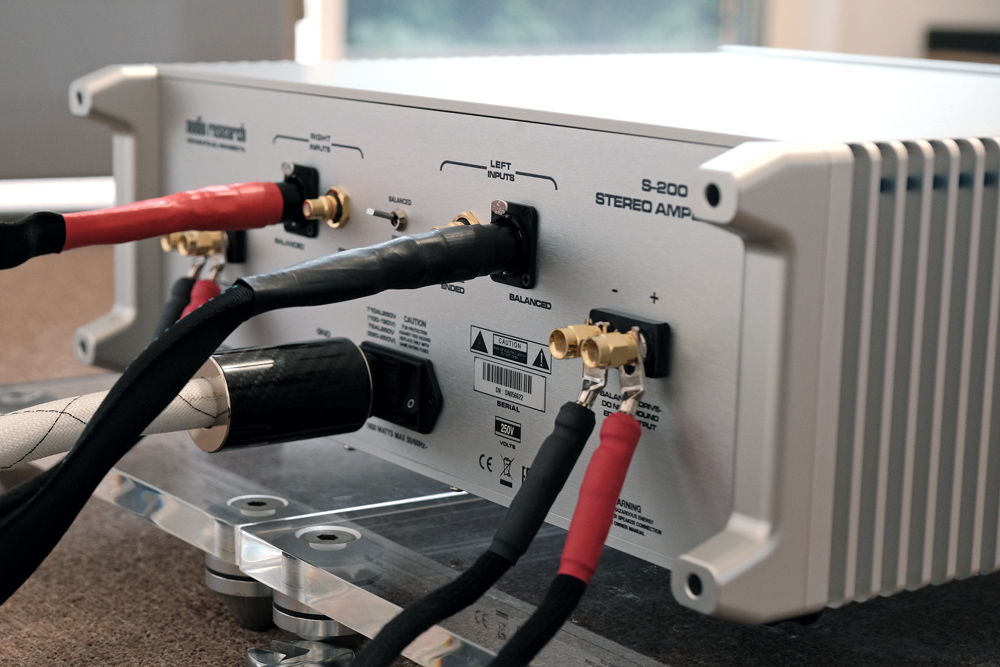
The rear panel is as simple as. Balanced XLR inputs, unbalanced single-ended RCA inputs (switch controlled), custom gold plated binding posts, a ground post, and an IEC receptacle mated to an on/off switch and fuse. Finito.
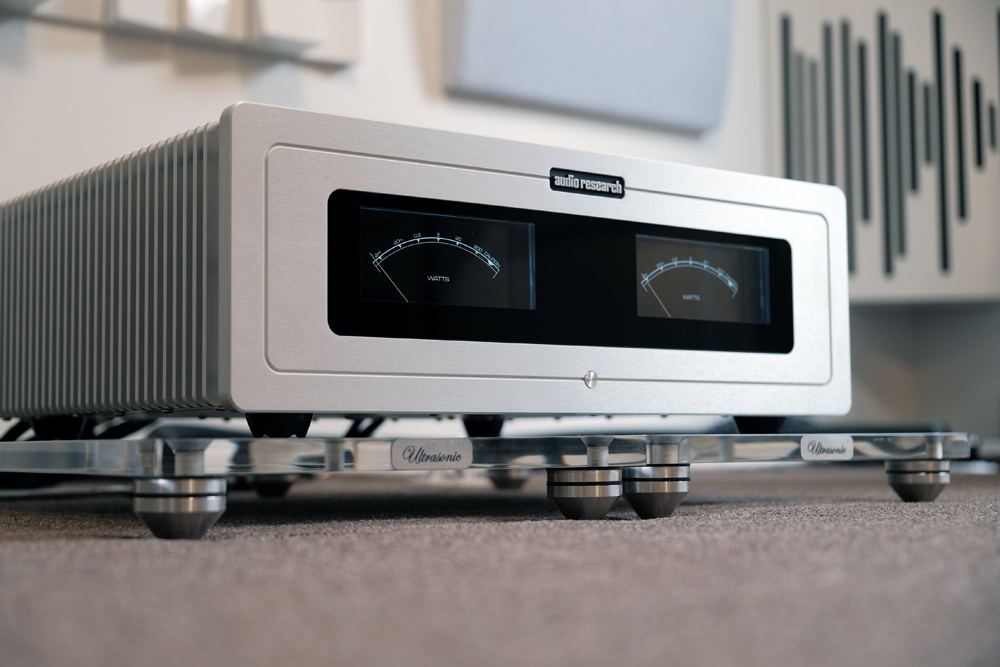
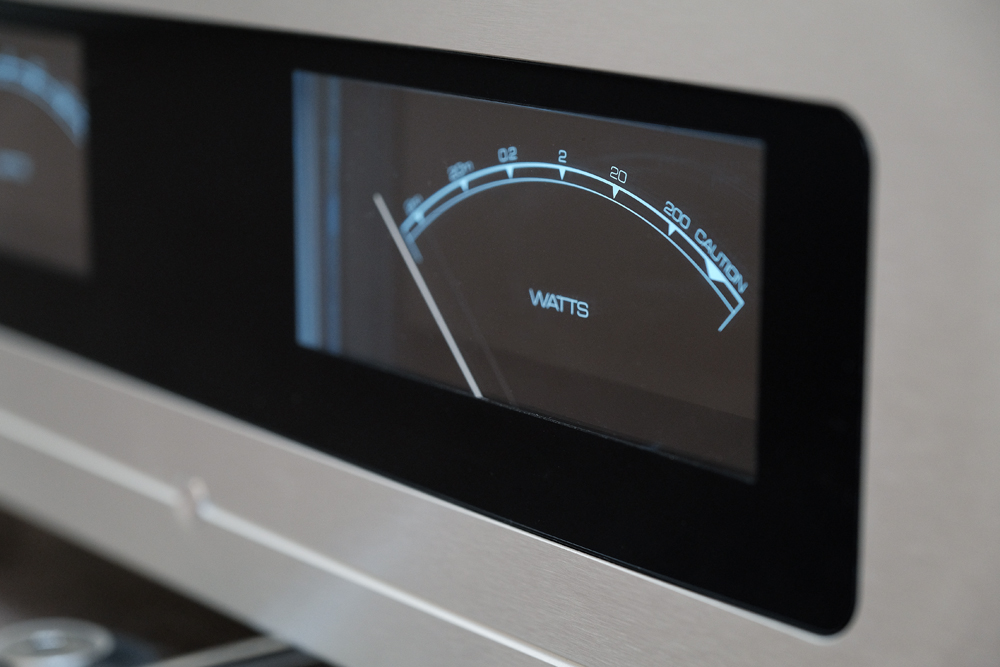
Around the front, a central standby button, and a set of very attractive dual power output meters that, although not the ‘GhostMeters’ employed in the Reference amplifiers, somewhat stylistically resemble them. The chassis is cooled via small bespoke heatsinks on the side panels. In typical Audio Research fashion, the overall chassis assembly, design and construction is excellent while being available in silver and black finishes. All Audio Research products are designed and manufactured in Minnesota, USA.
If You Want To Go Far, Go Together
I ran the LS-2’s balanced XLR outputs into the S-200’s balanced inputs, with my Totaldac’s tri-unity converter receiving signal from 432 EVO AEON server/streamer then passing it on to a single-ended input on the LS-2. I also connected my Transrotor Crescendo Black turntable directly from the Reed 1X tonearm to the LS-2’s SE2 input.
Spinning “Nuestro Tiempo” from Astoria’s Piazzola: Adios Nonino, showed the AR combo to be a neutral, well balanced, enjoyably dynamic duo. The piano and bandoneon/accordion pairing was expertly separated so that each shined without overpowering the other, while the percussion accented the track real dynamic snap. Each very disparate instrument was rendered with excellent inner detail and satisfying attack, the latter translating to a good sense of PRaT (Pace, Rhythm, and Timing). I remember thinking while listening to this album, “These two are really made for each other…”. Yeah, quite the pairing, here.
I keep using this track for its out-of-the-park recording quality: “Tea For Two” from the Tsuyoshi Yamamoto Trio’s superb What a Wonderful World album. In the track’s intro, the low-level detail presented by the gently brushed snare along with the resonances of the piano keys and pedals, always provide a tell-all. If the product under test can’t resolve nuances of the most exquisitely delicate type, then I know I have a product with a lower capacity to recreate finer details. No such issue here. The LS-2 and S-200 pairing delivered finely resolved micro-details that blended with the music with effortless clarity. When the piano and acoustic bass kick-in in full swing, the tonality of both instruments, as disparate as they are, was presented with truthful accuracy and a complexity of tonal shades that sounded very natural.
Bass guitar maestro Victor Wooten’s “A Little Rice and Beans” from his Trypnotyx album provided me with a clear understanding of the low frequency capabilities of the LS-2 and S-200 duo. This pre/power combo excels in clarity, nuance and rhythmic precision, leaning into those qualities in preference to outright voluminous extension. I’d say this outcome has been wisely predetermined by the Audio Research designers. Often, I’ve heard electronics that deliver tremendous low frequency depth yet sacrifice outright punch, tightness and micro-dynamic articulation. Worse still, some products stray into overhang or even boominess in pursuit of big bass. Not with the LS-2 and S-200. Here, it’s thumpingly clean and intricately detailed. That’s not to say the very lowest frequencies were absent, or even lacking, but rather the duo prioritises tempo and flow, resulting in a more balanced, overall coherent delivery of the bottom octaves.
The so-called ‘magic’ of valves was easily heard through both male and female vocals. Emanating from the LS-2 and transferred to the speakers faithfully by the S-200, the vocal clarity and sheer full-bodied presence of Rhiannon Giddens on “Lask Kind Words” from her Tomorrow Is My Turn album was moving. Giddens will always embrace the listener with her warmth and humanity.
The same was true with Eric Stekel’s “We’re Still Friends” from Polyphonic Prayer, where his bluesy vocals cut through the piano and electric keyboard accompaniment with stunning animation and emotional pull. Said piano’s timbral complexities and resonance of soundboard and lid were beautifully reproduced too. The guitar solo showcases the man’s skills clearly, even as it builds towards the finale, with the bass, drums and keys rising to equal intensity.
Firing-up the phono stage is just a matter of switching the LS-2 to its SE2 input (Single-Ended 2), with the unit automatically recognising a phono stage card has been inserted. The phono module features two fixed settings for impedance, being 47 kohms for Moving Magnet (MM) and 500 ohms for Moving Coil (MC). Gain is stated as 42 dB for MM and 62 dB for MC.
Speaking of the low frequency presentation of the Audio Research duo, the trait that is immediately evident is the superb bass the phono stage offers. Man, there’s good sound in those grooves!
On the Pixies’ “Hey” from the band’s Doolittle album, I was astonished at the sheer power and concussive punch in the kick drum. Kim Deal starts the track with a short bass riff which rides along with Black Francis’ vocals. Deal’s electric bass is superbly, and I mean superbly rendered, with tonal authenticity, rhythmic rightness, and such a pure presence that it made me do a double-take. In fact, I jumped up, raised the tonearm, and rushed to re-cue the intro, just to get another immediate listen. When Joey Santiago and Black Francis kick-in with their guitars, it’s all resolved and separated with phenomenal precision. Then, the mayhem subsides, and David Lovering’s kick drum comes in with a force that could knock the composure off even the coolest listener. Wow! Yeah, this phono module is quite something.
On vinyl, the beauty, purity, and heart wrenching drama of Du Pré’s cello on Elgar’s Cello Concerto (the composer’s final concerto) with the London Symphony Orchestra conducted by Sir John Barbirolli was profoundly engaging. The LS-2’s phono module conveyed with utter assurance all the work’s drama while also clearly communicating Du Pré’s masterly and emotive handling of her instrument. Even though it’s not the greatest of recordings, the spatial reproduction spread wide, tall and deep, both in this album and in other orchestral recordings captured in similarly expansive fashion.
Conclusion
So, if you’ve been reading this review, it should be evident that my preferred M.O. for amplification is to combine the best of valves in preamplification with an appropriately capable solid-state power amplifier.
Did the new LS-2 preamplifier and S-200 power amplifier duo cut the mustard? Did it make music? Well, yes, I’d strongly assert in the affirmative.
Functionally, there’s a built-in sense of assurance this kit brings to the table. There’s a real all-round solidity that inspires confidence. The LS-2 and S-200 units seem… understated, yet they operate like stealth, bulletproof ninjas.
Of course, the most important element of the formula is sonic performance. On that metric, both components would deliver in spades on their own. But it’s as a team, backing each other and playing in sync, that the Audio Research LS-2 and S-200 have the potential to elevate your system to an even higher plane.
Yeah, together, these cool cats, they play tunes like musicians.
… Edgar Kramer
This email address is being protected from spambots. You need JavaScript enabled to view it.
Associated Equipment
- Speakers — Wilson Audio Alexia V, Axis Loudspeakers VoiceBox S (nearfield monitor), Vermouth Audio Little Luccas Mk.II Limited Edition, Atacama stands
- Amplifier — Gryphon Audio Antileon EVO
- Preamplifier — Supratek Cortese, Totaldac d1-triunity (periodically, direct to amplifier)
- Sources — Digital: 432 EVO Aeon Mk.3 Reference Music Server/Roon Core, Yamaha CD-S2100 transport, Totaldac d1-triunity DAC. Analogue: Transrotor Crescendo with Konstant Studio controller, Reed 1X Tonearm with upgraded internal wiring, Shelter Harmony cartridge, The Funk Firm Houdini cartridge decoupler, Supratek Cortese & REDGUM Audio RGPH2 phono stages
- Processor — DEQX PreMate (part of arsenal/casual use)
- Cables — VYDA Laboratories Orion Silver Reference HFC IC and speaker cables, Cerious Technologies Lumniscate loom, PSC Audio custom design XLR, Vermouth Audio Reference loom, Tubulus Concentus USB
- Audio Rack — SGR Audio Statement MODEL V, Aspire Audio Belgravia amplifier platform (customised for Gryphon Audio Antileon EVO), Stereotech Aluminar Dark 3-tier rack
- Acoustic Treatment — Vicoustic Multifuser Wood, Wavewood Ultra, Cinema Round Premium and Super Bass Extreme
- Miscellaneous — Silent Angel Bonn N8 Pro network switch, GigaWatt PF-1 EVO power strip, Les Davis Audio Viscoelastic CLD discs, Voodoo Cable Iso-Pods, Bocchino Audio Mecado, Secret Chord Analogue Record Restore, plus miscellaneous accessories
Audio Research LS-2 Preamplifier & S-200 Power Amplifier
Price: LS-2 AU$16,995, Phono Card AU$1595, DAC Card AU$1995, S-200 AU$24,995
Australian Warranty: Three Years, 90 Days on Valves
Australian Distributor: Synergy Audio
+61 3 9459 7474
www.synergyaudio.com
Audio Research
6655 Wedgwood Rd N Suite 115
Maple Grove
MN 55311
USA
+1 763 577 9700
www.audioresearch.com