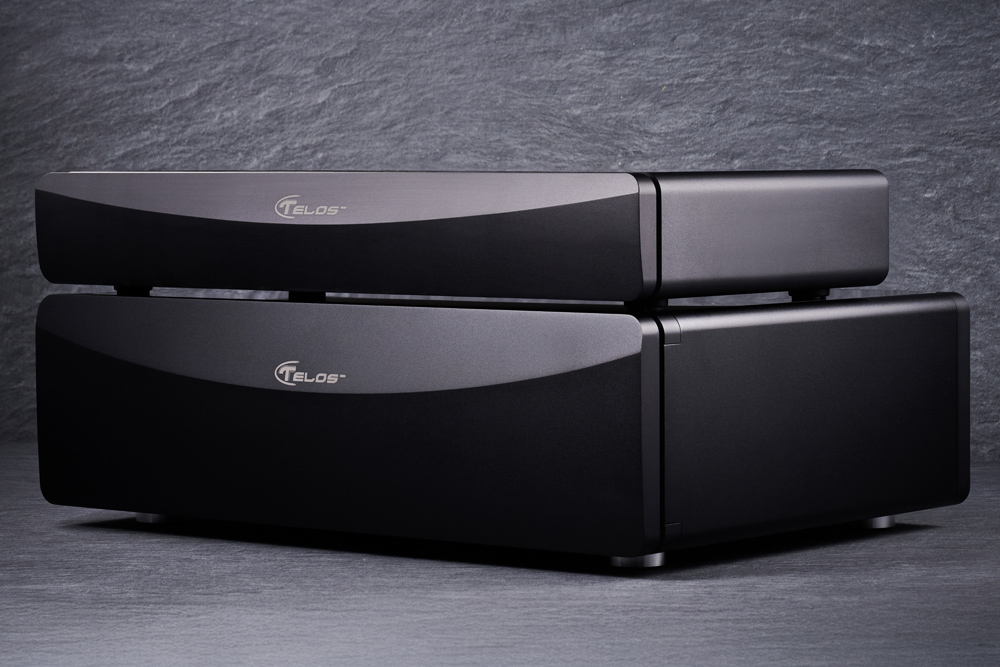
Is the first connection point actually the last frontier between good and great sound? Barring the loudspeakers, all electronics rely on AC power and are therefore susceptible to grounding issues ranging from the insidiously near-imperceptible to the unexplainably nightmarish. Ever traced a ground loop without suffering PTSD? Anyone? While hi-fi’s AC power space is predominantly inhabited by products which filter or regenerate, Telos Audio Design approaches the vagaries of the household mains line with a set of expertly engineered products that tackle grounding schemes and AC-induced distortions. Recently introduced, the Foundation series is the company’s entry point into truly intelligent manifestations of the genre.
The Core of Groundwork
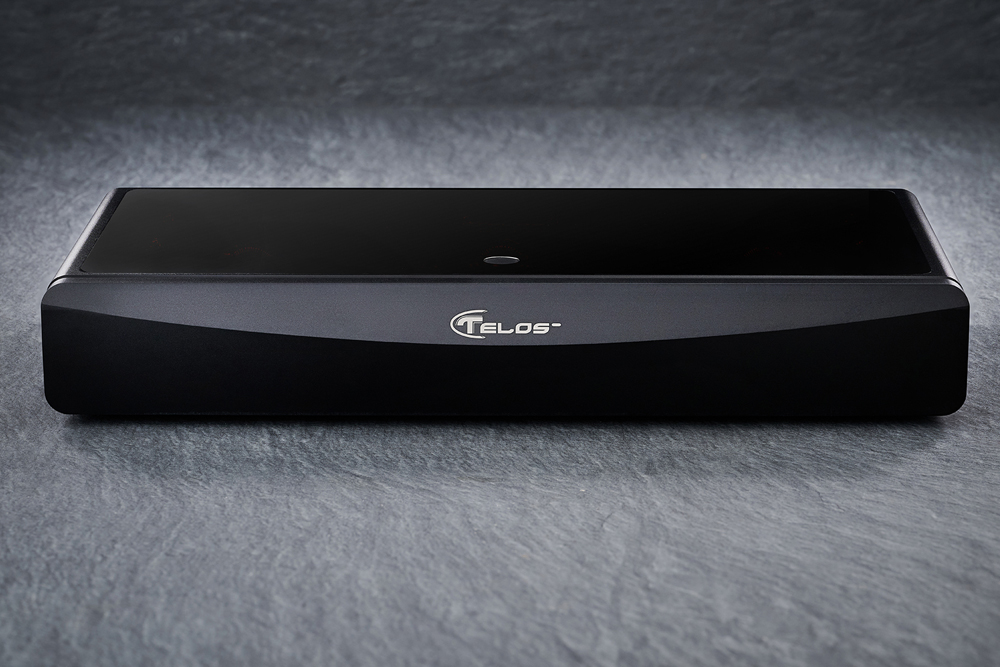
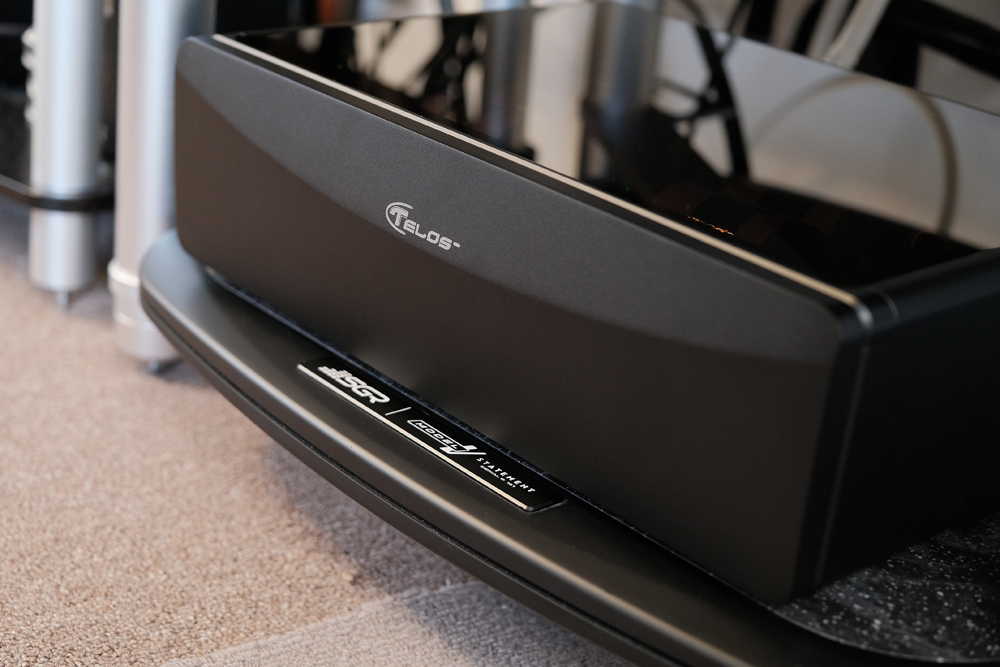
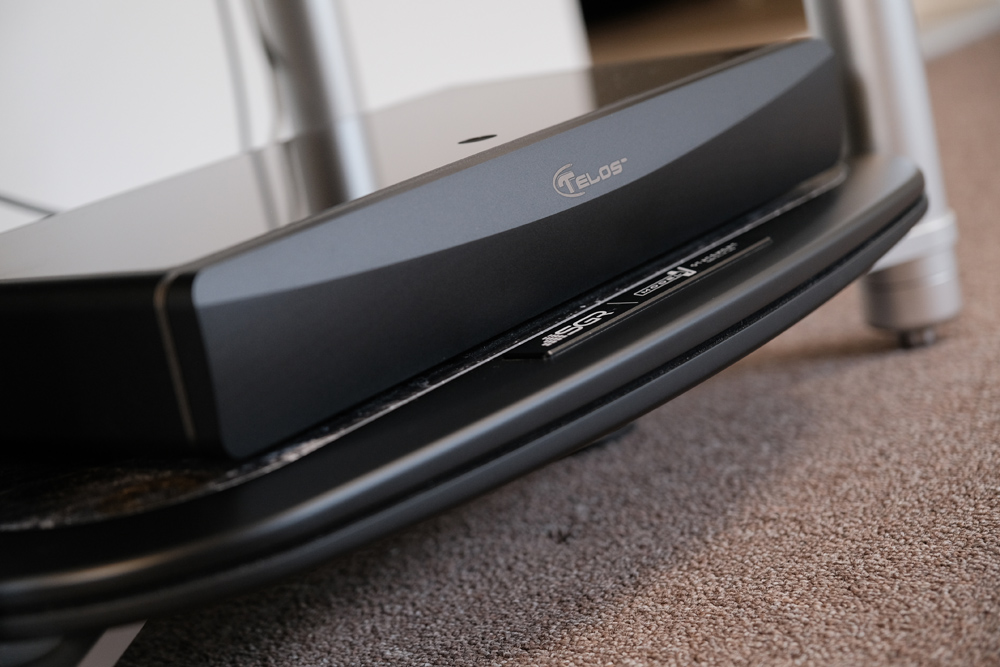
Both units form part of the new Foundation series from Taiwan’s Telos Audio Design, founded in 2006. The company’s high-tech products are engineered by chief designer and company Director Jeff Lin who also develops sophisticated power systems for industries outside of audio. While many of the upper model’s technologies have trickled down into Foundation, the new components feature re-engineered circuits and an updated aesthetic. Foundation chassis are constructed from CNC-machined aluminium alloy and are distinguished from their brethren by a scalloped ‘smiley face’ fascia which is complemented by anodised brushed finishes all-round.
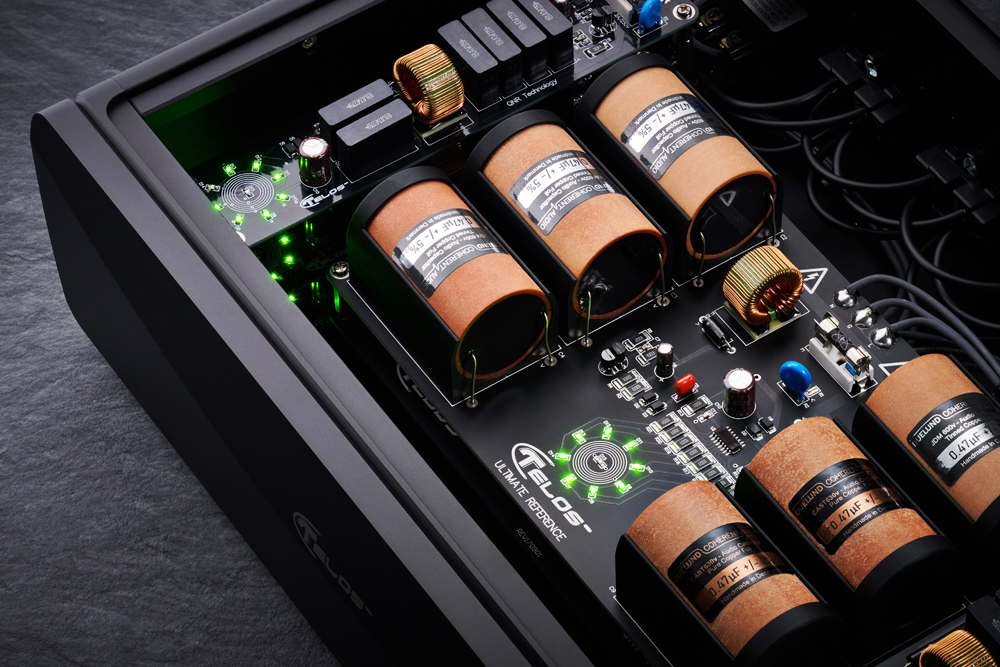
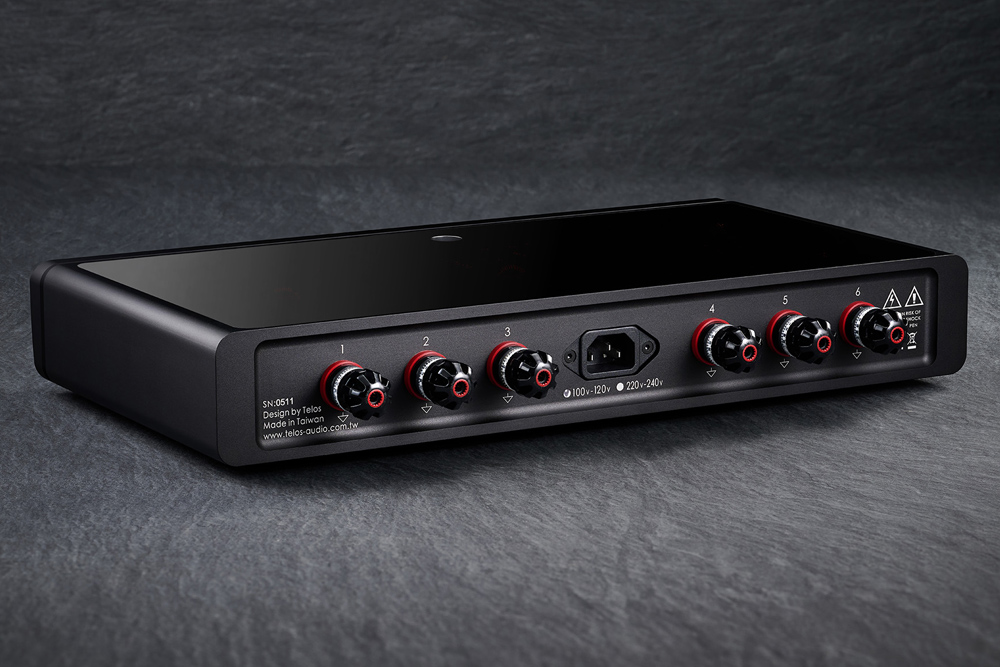
As per the company’s trademark, the units’ top panels are smoked acrylic, offering a clear view into the neatly laid-out circuitry and its small embedded LEDs which, in both components, make-up part of the electrical functionality. There are no controls, no switches, just high quality AC sockets on the Power Core and WBT binding posts (again, no cheapies here) for the Ground Core. By the way, the internals on both units are a sight to see: super high quality electronic componentry, immaculate layouts, and an overall design that inspires confidence in the engineering and product longevity.
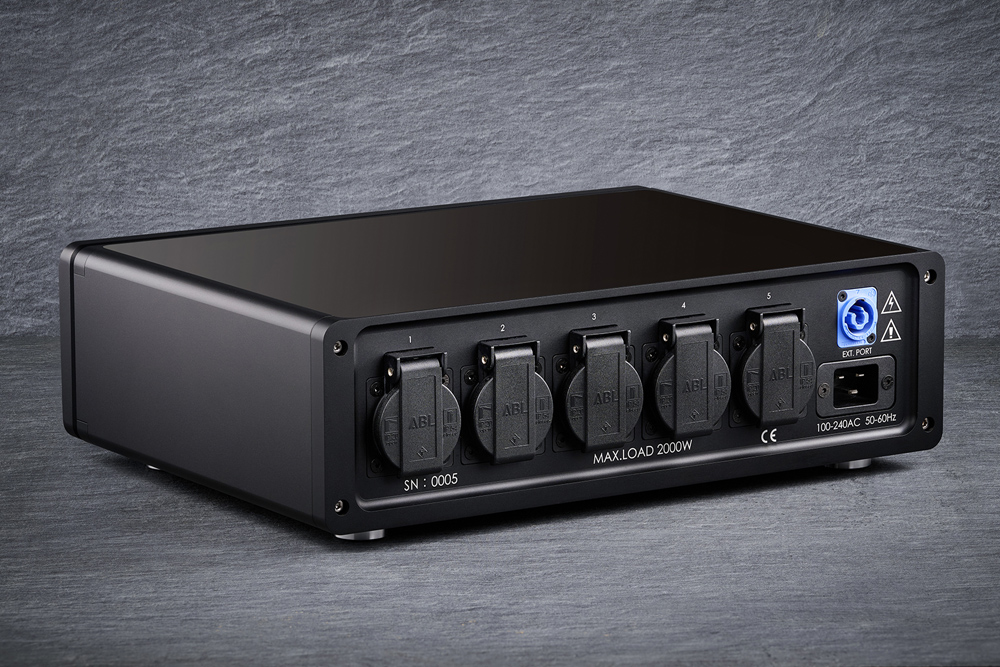
The Foundation Power Core unit sports five AC receptacles, each with its own dust-protecting, spring-loaded cover and an IEC 20 socket (requires IEC 19 plug). The sockets can be used for sources, preamplifiers, and amplifiers, with the latter being catered to via its 20A current output and a highly efficient power distribution scheme. In fact, Telos (for short) emphasises in its manual for Power Core that the unit can cater to demanding high-current amplification products. In other words, no matter the demand, anything in the signal chain that requires AC can be plugged into Power Core. Energy transfer is substantial thanks to a bank of Duelund capacitors employing a new material technology.
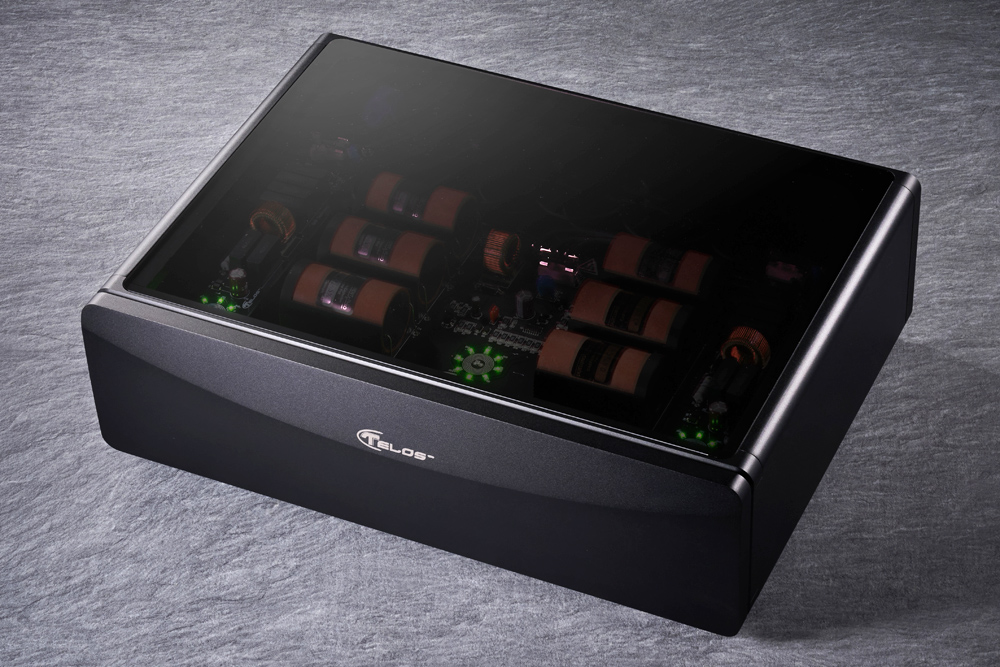
Telos has developed ‘QNR’ (Quantum Noise Reduction), a patented proprietary electrical noise reduction scheme that dynamically filters AC distortion artefacts. QNR is activated immediately when the unit is turned on and employs “reverse ripple suppression technology” which is said to minimise ripple noise in random currents, maintaining stable and clean AC under high loads.
I wanted some deeper insights into the makings of both products, so I contacted company founder and lead engineer Jeff Lin asking for a summary of the workings behind the products.
Power Core is not a traditional passive filter. Conventional filters typically use series RC/LC networks to block noise; however, this approach may also increase impedance and affect instantaneous current delivery. Power Core adopts a hybrid architecture that combines LCR balanced logic design with active inverse-phase noise cancellation technology. The LCR structure balances and integrates power energy without restricting current flow, while the active inverse-phase circuit detects noise frequencies on the power line in real time and generates corresponding inverse signals to cancel them.
In other words, Power Core does not "block" power; it reorganises and optimises the power structure. While reducing noise density, it maintains full dynamic range and instantaneous current delivery, resulting in a more natural and stable musical presentation.
As far as Ground Core, Telos' patented active grounding circuit architecture was first introduced in 2015 and has now undergone ten years of real-world market validation and application. During this period, we’ve visited various countries annually to interact with users and gather first-hand feedback. Throughout the GNR generation, the design has undergone five hardware and software upgrades, each based on extensive listening evaluations and system-matching tests.
The stated "40% enhanced stability" of the Foundation Ground Core primarily results from the re-optimisation of the control circuit's power supply architecture. Earlier versions operated with a 3.3V CPU supply, while the new-generation Foundation Ground Core has been upgraded to a 5V supply design. At the same time, the CPU supply parameters were redefined, and a new high-precision clock and frequency calibration module were introduced.
I asked what QRC technology is and, seeing it’s also a feature of Telos Audio Design’s upper models, how it comes into play in the Foundation series products.
QRC (Quantum Resonation Conditioner) was the earlier name of Telos' power architecture. In the Foundation series, it has been upgraded and renamed Power Core (Power Energy Optimization Core) to more accurately reflect its design focus on power energy optimisation and management. These comprehensive upgrades to the core control conditions provide greater operating headroom and improved resistance to interference. As a result, the approximately 40% stability enhancement reflects improved operational consistency and long-term reliability at the circuit level, rather than a quantified change in any single sonic parameter.
Simplistically, Power Core’s active circuit acts like a form of strainer, a sieve, which acts at specific frequencies, reversing phase in order to remove artefacts of distortion/noise creeping into the signal from the mains line.
On the Ground Core, a small flush-mounted button on the top panel toggles between three frequency settings each marked with a different colour LED and each associated with a dedicated sonic signature. According to Telos, the green LED operates at 7.83 Hz and is said to enhance low frequencies, the orange LED is set at 432 Hz, with Telos stating it provides a little extra presence across the midrange, while the third LED, red in colour, is set at 528 Hz and is said to enhance “high frequencies and spatial details”.
A CPU voltage regulation circuit provides 40% “enhanced stability” (as also mentioned above) said to offer long term reliability. Jeff Lin’s attention to detail extends to developing ‘Solder Tuning Technology’, a specific solder formulation which he found to influence the sonic performance while also ensuring extended reliability. Lin has also refined the Ground Core’s circuit by lowering the unit’s output impedance and increasing its current output capacity. The company’s ‘GNR’ technology is said to have improved ground noise resistance for a “more transparent soundfield”.
I connected my sources and the Supratek Cortese preamplifier (as well as the new Audio Research LS-2 preamplifier in for review) to the Power Core and ran grounding cables from Ground Core all to components. Fortunately, my Totaldac tri-unity digital to analogue converter features a dedicated ground post, making things super easy. The preamplifier’s phono stage ground post was also used as was an easy-access chassis screw on the server/streamer. So, while on the surface, Ground Core’s setup may seem a little daunting, in practice, it’s all reasonably straightforward.
Power Grounded in Music
With everything plugged-in and ground-connected, I was ready for the listening sessions. On Ground Core, I first experimented by switching between the three modes (green, orange, red described above), hearing quite subtle sound differences that were, nevertheless, evident with some focussed listening. After a period of testing, where I oscillated between all three options for some time, I narrowed it down to red (enhanced highs) and orange (midrange vocal presence). I settled on the latter for a tad extra midrange ‘life’ for the remainder of my time with Ground Core.
The one aspect of performance that became evident from the starting line was an increased level of background noise. It’s that clichéd “inky black” noise-floor trope, the one that earns a sceptical “really?”, yet it’s something that you don’t hear unless it’s been markedly reduced. The uptick of that is that low-level nuances, the micro-details, are subtly more discernible, more evident within the musicscape. The finger brushes and scrapes on steel strings, the soft brushing on the snare, the delicate touch on a cymbal, the subtle vocal intonation.
The delicate interplays between individual notes and chords played by Sylvain Luc on “Light My Fire” from his album Joko, were slightly clearer, more defined, further resolved via the Foundation components. There may have been a very slight increase in the transient attack of notes’ leading edges too.
The first few seconds on the intro to “Tea For Two”, the first cut on Tsuyoshi Yamamoto Trio’s What a Wonderful World album, is a poster-track for refined and subtle micro-details. Basically, the intro illustrates exactly what I mention two paragraphs above. The track starts with individual notes which are beautifully rendered, then, I heard a subtle enhancement of the finer nuances of the piano’s pedals, the resonance of its board, the air of the notes, while the gentle cymbal strikes and the softly-brushed snare are apparent in a realistic and coherent way.
Sometimes, depending on the recording, I could swear I heard a more defined soundstage, better-focused images. I played all my reference live recordings of large orchestral works (Serebrier Conducts Serebrier on Reference Recordings), choir recitals (Misa Criolla & Popular Devotion in Early Music on Cobra Records), folk music, and alternative ‘unplugged’ selections (too many to list on both genres). Of course, direct comparisons are very difficult. A/B’ing with Power Core and Ground Core in play and then without, is a time consuming process where aural memory, and its short span, will produce unreliable results.
Confidently apparent, however, was a worthwhile refinement to the system’s overall presentation. Poor recordings with exaggerated sibilance were resolved in a way that maintained vocal presence, yet making more natural those overdone ‘s’ and ‘t’ sounds. In a system that walks the fine line between ultra-high detail and eventual listener fatigue, the Foundation team restores the balance without introducing a single negative trait.
My system inherently manages and totally controls that tricky taming of excessive sibilance and the Foundation duo further smoothed things out. So, in order to test that sibilance-removal super-power, I brought out a set of silver-based cables I own that tends to stray towards a bit of high frequency colouration, or… enhancement.
On Chris Cornell’s otherwise excellent Euphoria Morning album, Rock’s best male voice (and so, so missed) is captured beautifully, barring some extra zing due to the close-miked recording. On the title track, the over-enthused silver cable’s treble sounded somewhat more natural, less tizzy, more controlled. None of the transient attack and tonal signature of Cornell’s acoustic guitar strumming was lost, so team Foundation preserved those essential qualities. It just refined the sound universally. I fully expect the same result in a system where the loudspeakers’ tweeters are a touch forward, or slightly glassy, (often, though definitely not always, the case with a metal tweeter) or where an amplifier exhibits a tad too much third-order distortion.
In my view, the cumulative effect of both the Foundation Power Core and Ground Core amounts to refinement, a super-low noise floor, a decimation of hash and tizzy artefacts, and the absolute presentation of low-level nuance. And while I was unable to test ground loop suppression – my system is super quiet, even considering a reasonably high gain preamplifier, and does not suffer that nuisance – I’m confident the Ground Core’s abilities in that area would be dead-set spot-on.
Conclusion
OK, I asked in my intro if the AC mains output is the last frontier for good sound. I should have also asked if an intelligently-designed grounding scheme is a complimentary aspect of pushing through to the other side of that boundary. These are elements of the audio system’s configuration, and important contributors to the musical experience, which are often somewhat neglected.
After several weeks with Telos Audio Design’s Foundation Power Core and Ground Core components, I’d have to say with confidence that addressing head-on power delivery and component grounding will provide the final upgrade facet (or, actually, I should say the very first facet) of a high-end system’s global AC and grounding flow. AC mains and grounding are, in fact, the primary enablers of your hi-fi setup. Power Core and Ground Core form the very foundation (pun intended) of a truly refined, low-noise system architecture capable of delivering distortion-free and most purely rendered music.
Yeah, in this scenario, power most definitely does not corrupt… and true power is… quiet.
… Edgar Kramer
This email address is being protected from spambots. You need JavaScript enabled to view it.
Associated Equipment
- Speakers — Wilson Audio Alexia V, Axis Loudspeakers VoiceBox S (nearfield monitor), Vermouth Audio Little Luccas Mk.II Limited Edition, Atacama stands
- Amplifier — Gryphon Audio Antileon EVO
- Preamplifier — Supratek Cortese, Totaldac d1-triunity (periodically, direct to amplifier)
- Sources — Digital: 432 EVO Aeon Mk.3 Reference Music Server/Roon Core, Yamaha CD-S2100 transport, Totaldac d1-triunity DAC. Analogue: Transrotor Crescendo with Konstant Studio controller, Reed 1X Tonearm with upgraded internal wiring, Shelter Harmony cartridge, The Funk Firm Houdini cartridge decoupler, Supratek Cortese & REDGUM Audio RGPH2 phono stages
- Processor — DEQX PreMate (part of arsenal/casual use)
- Cables — VYDA Laboratories Orion Silver Reference HFC IC and speaker cables, Cerious Technologies Lumniscate loom, PSC Audio custom design XLR, Vermouth Audio Reference loom, Tubulus Concentus USB
- Audio Rack — SGR Audio Statement MODEL V, Aspire Audio Belgravia amplifier platform (customised for Gryphon Audio Antileon EVO), Stereotech Aluminar Dark 3-tier rack
- Acoustic Treatment — Vicoustic Multifuser Wood, Wavewood Ultra, Cinema Round Premium and Super Bass Extreme
- Miscellaneous — Silent Angel Bonn N8 Pro network switch, GigaWatt PF-1 EVO power strip, Les Davis Audio Viscoelastic CLD discs, Voodoo Cable Iso-Pods, Bocchino Audio Mecado, Secret Chord Analogue Record Restore, plus miscellaneous accessories
Telos Audio Design Foundation Power Core & Foundation Ground Core
Price: Foundation Power Core US$15,000, Ground Core US$12,000 (Ex VAT for EU)
Global Warranty: Three Years
Australian Dealer Finder Not Available (Telos Direct)
Australian Distributor: Telos Audio Design Direct
Sheng-Kai Co., Ltd
No.102, Pingding Road,
Tamsui Dist., New Taipei City 251
Taiwan (R.O.C.)
+886 2 8626 0773
https://telos-audio.com.tw/