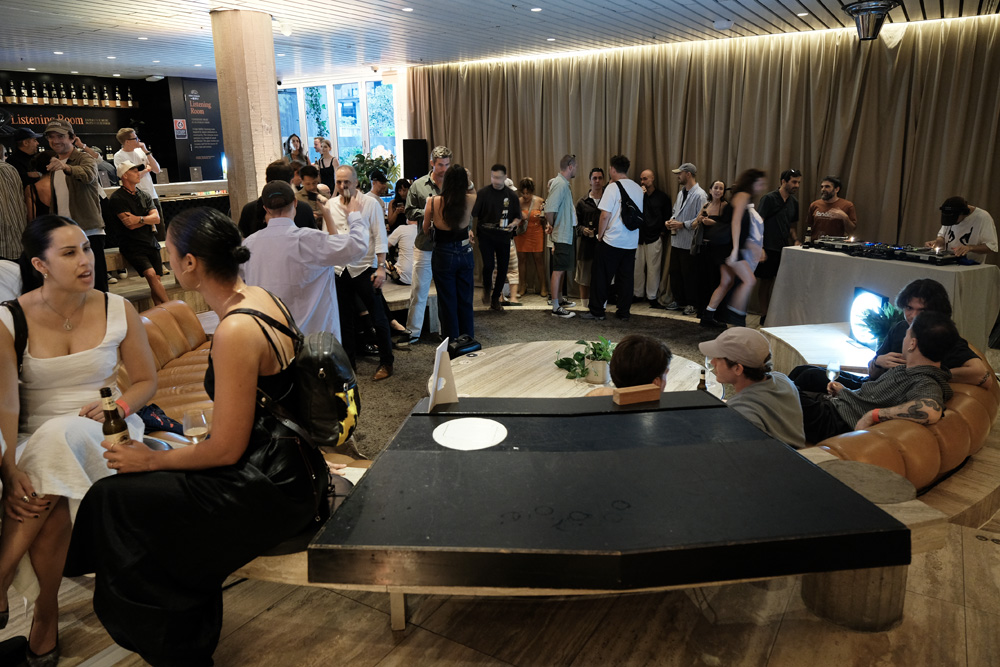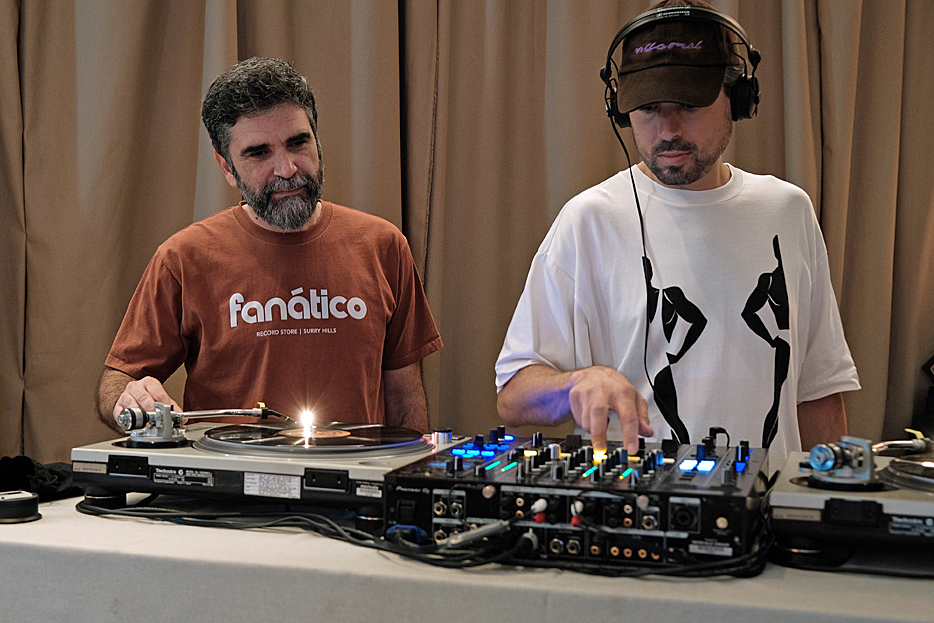




The Penthouse, a VIP area at Sydney’s flashy Ivy nightclub, was the setting for an invite-only gathering of 200 guests who linked-up with Gilles Peterson, renowned DJ, record label founder and broadcaster, for an evening of music and his favourite cuts. The sound system? A premium audio system curated by Bondi’s own Atlas Gouverneur from Atlas Harmonic.
Musical Heights
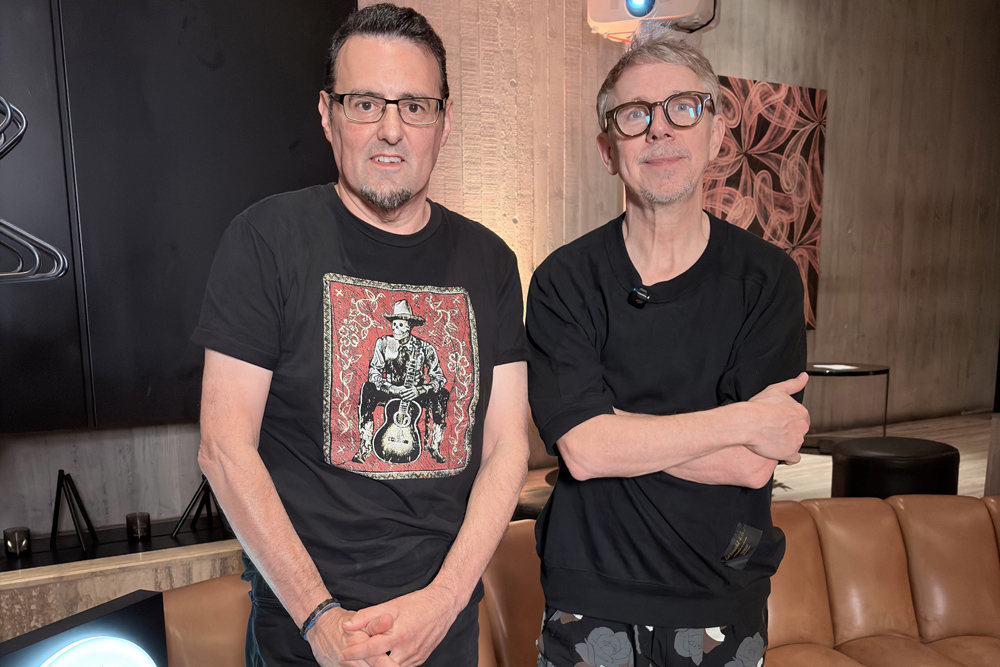
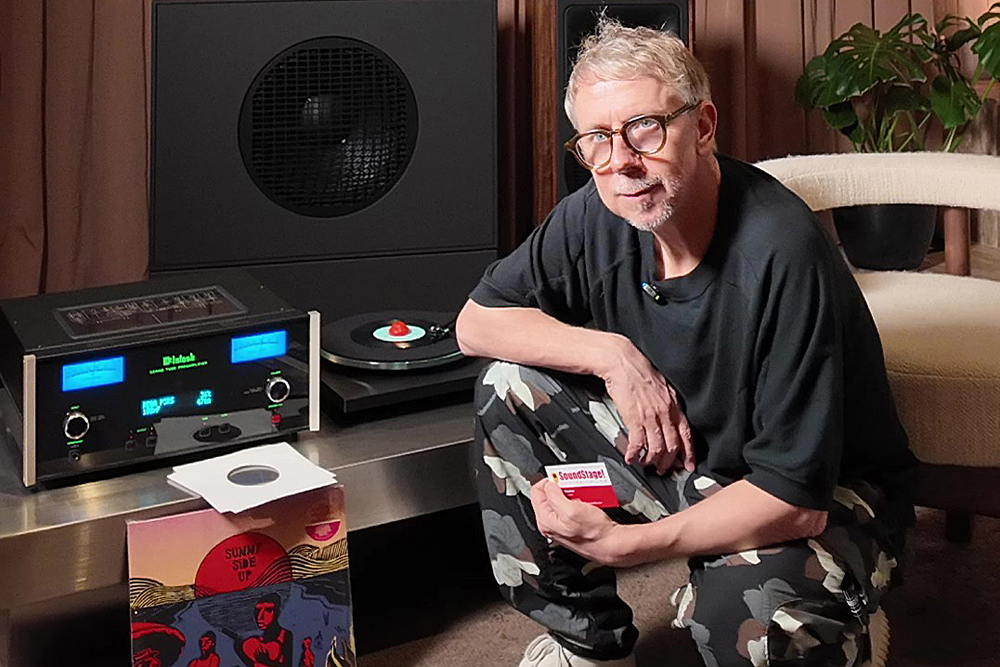
As I enter the first level of Ivy’s penthouse, a trickle of early arrivals is beginning to gather in anticipation of a soiree dedicated to musical discovery. I’m greeted by Scrabble PR’s Gabe Cramb and Layla Carroll who lead me to an upper level, the Kirin Ichiban Listening Room, where I’m introduced to Gilles Peterson. There, I also see Atlas Gouverneur (from Atlas Harmonic, The Speaker Project, and other ventures) whom I’ve known for years. Atlas is a talented local loudspeaker designer currently based in Sydney’s iconic Bondi. A warm greeting and some brief banter (it turns out Gilles and I were both students of Lycée Français in different parts of the world), and we move to an area of the floor designated for Gilles’ listening sessions taking place later in the evening.
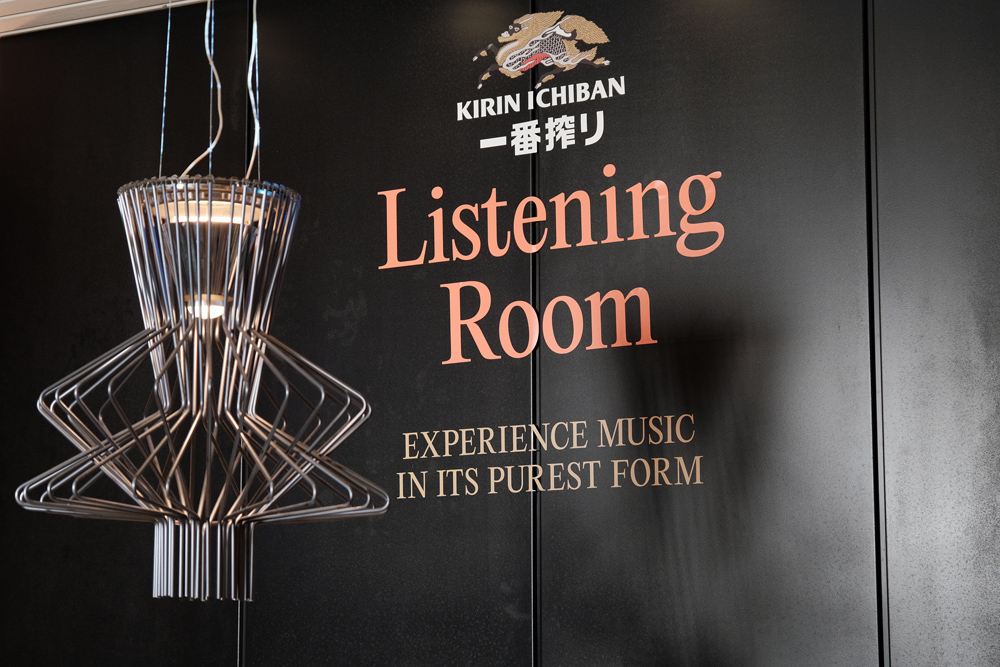
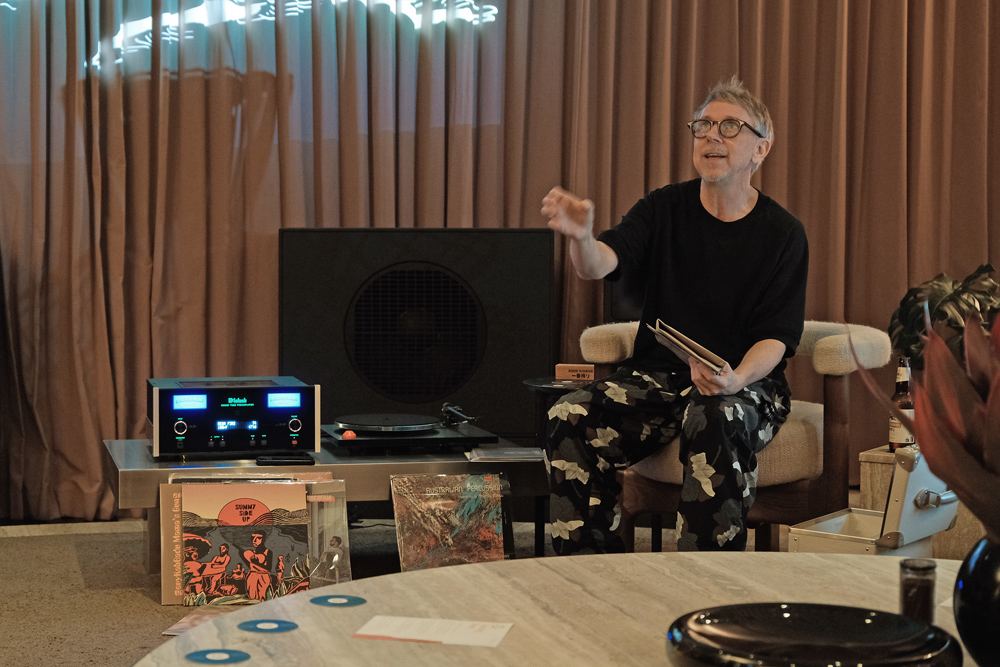
It’s a large split-level, acoustically challenging space dominated by a circular area bordered by a sweeping lounge that runs around its parameter. At one end, I see the makings of a quality system. “This should be interesting” I say to myself. The Kirin Ichiban Listening Room, yes, the classy Japanese beer (which is flowing generously), is a team-up with Monster Children magazine and Ivy Penthouse. Here, Gilles will be spinning music that has shaped his career, from his very early days as one of three “Casuals” who stood apart from the hordes of Emos, Punks, Mods at his school, right through to discoveries he came across in Sydney’s record stores literally just hours prior to the event.
Both Gilles and Atlas’ mandate was to create an experience, to curate a system capable of producing high power and sonic performance with the “dynamic, live sound” required to engage the audience at each of the multiple listening sessions.
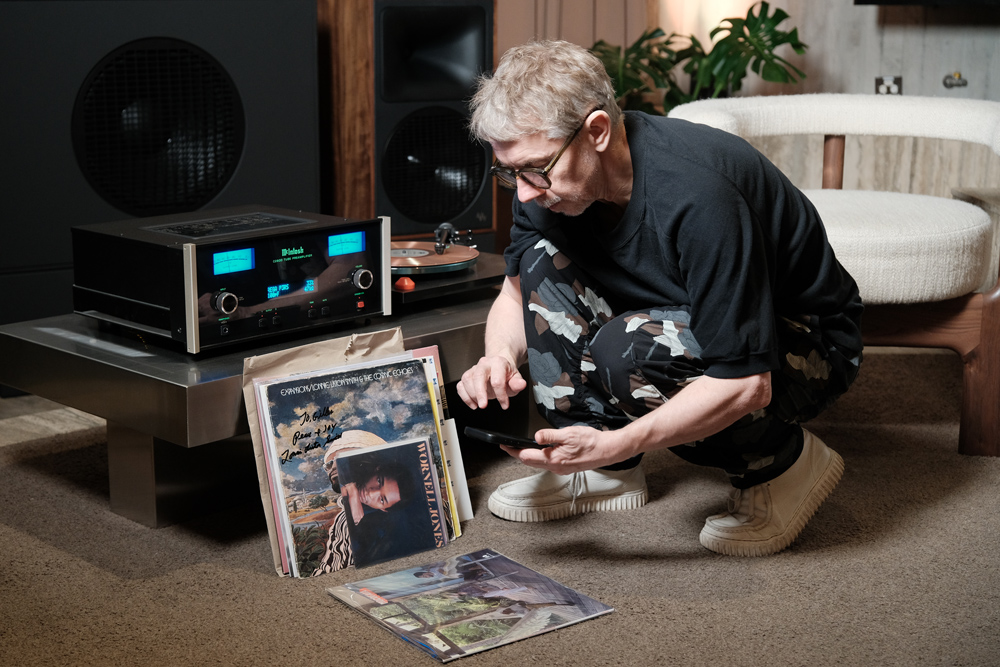
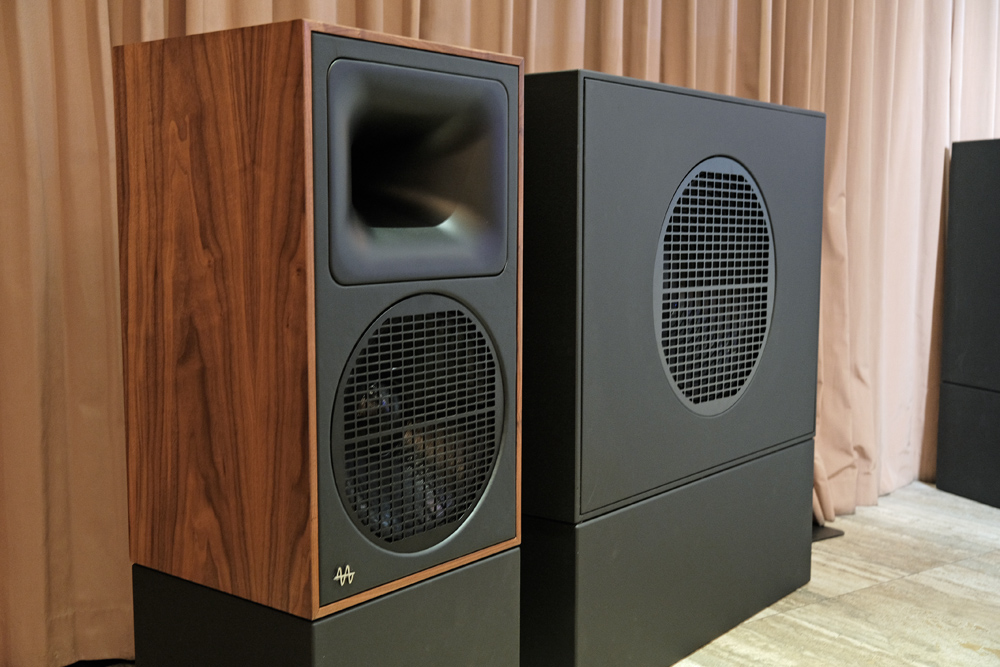
To that end, the electronics provided by Australian distribution company Synergy Audio, consists of a Rega Planar 3 RS (Rega Special) turntable with its RB330 tonearm and ND5 Moving Magnet cartridge. The McIntosh Laboratory C2800 preamplifier delivers the phono stage and balanced XLR output signal. Said signal is fed to Atlas Harmonic Tufnel active speakers and two newly-designed 21-inch subwoofers. The Tufnel 2-way speakers feature a compression driver loaded via a bespoke horn mouth while the lows are provided by a high-efficiency 15 inch woofer. While in this instance the Tufnel speakers were fully active, they are also available in passive versions.
So, just prior to the listening sessions, I’m chatting with Gilles. I ask him whether, in his approach to this evening’s listening sessions, he selected tracks of particular high recording quality, in light of the event’s sound quality importance.
For this event I wanted to capture a different experience for a generation who want to hear more stories, who want to have a different experience than going to a club and that kind of sound. I’ve done this thing I call Liner Notes, just recently in Chicago and before that in New York, where I create a kind of ‘live radio show’ guide through my journey. It’s really fun and a new way to connect and do what I’ve done within a different context. It’s like what Colleen Cosmo Murphy does where she invites DJs to talk about one album and they do that out of a listening space called Brilliant Corners in London with a high quality audio system. With these events, you get to bed before midnight.
I then ask whether he thinks the success of vinyl, over the last few years, is due to a nostalgic element or because of its inherent sound quality.
I think it’s due to various things. I think it’s partly committing to the artist, where if you’re a young person and you like the group you end up buying the music and the merch, etc. It’s a little harder for us because record companies have now taken over the pressing plants and pressing however-million copies of Oasis albums… they run out of room for us. I still play a mixture of digital and vinyl. In clubs, as a DJ, each allows you to play differently. Out of the record box you’re more focused, where out of a USB you’re drowning in files. With vinyl, you’re limited with what you can play on the night which makes it more of a challenge because you can’t bring your whole collection, you just bring what you intend to play.
As far as sound, it can be better, but I think it’s more about how it allows you to mix… vinyl is less robotic, there are more mistakes and people sense it, and they become more invested in what’s going on. With digital, it’s become too easy to be too perfect… and everyone is amazing and the creativity went out of it a bit and things became, like, generic. For me, it’s nice to have that vulnerability the vinyl brings.
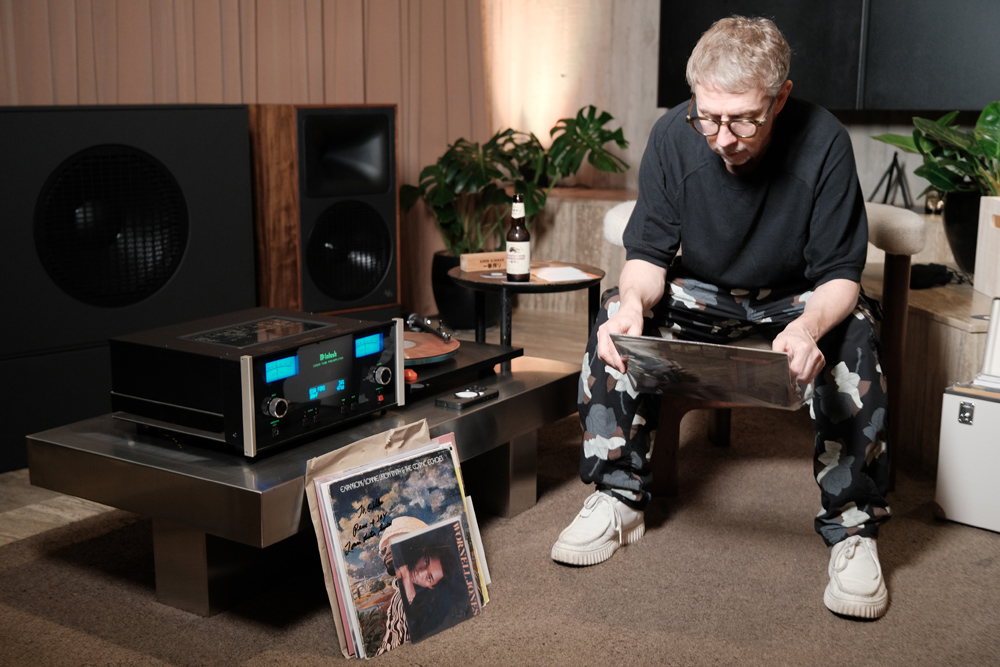
We go on to discuss other topics including how the younger generation are discovering and appreciating quality sound at many of the festivals Gilles runs, where there are a wide variety of stages and listening environments employing a spectrum of audio equipment, including high-end. “The kids are getting into it” is his remark.
Titanic Sound
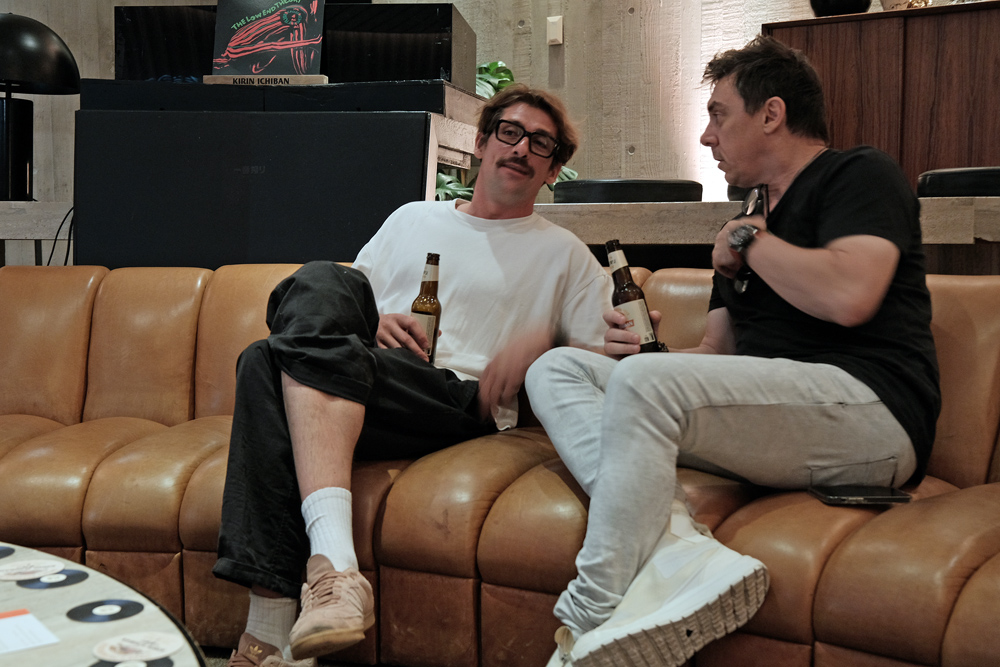 Atlas Gouverneur on the left with SoundStage! Australia reviewer Barry Johnston
From Gilles, I swing over to Atlas, who’s at the wings ready to give me the lowdown on his curated hi-fi experience for the night.
The idea initially was to create a high sensitivity system that uses horn elements but also to make it sound like a small speaker with very good radiation. So you could listen to a soundstage that wraps around you, something not really associated with horns. Then, take that a step further: what if you could marry hi-fi with the club sound. If you could bring the sound of the club, that really dynamic energy and then mix it with that velvety sound you get with rich harmonics and a big soundstage. To do that you need very wide bandwidth, excellent dynamics, and you need to have very good dispersion. For those three things, you need a 21 inch subwoofer.
In my opinion, the 21 inch subwoofer is the sweet spot in terms of extension, and it can go up to that 80 Hz mark but with high sensitivity. I’ve chosen a ported design because I wanted to get that tight transient sound and low group delay. When you think of club sound, one of the biggest drawbacks is that it’s built for output but not for control and you get a lot of delay from, usually, folded horns. Putting it in a ported box, yes it’s less efficient but it’s still 100 dB, not 106 dB or 110 dB, but you get that punchy, tight bass that brings you close to the music, it’s in time with everything else.
In terms of transferring a system like Tufnel and the large 21 inch subwoofers to a home audio context…
You’d need a fairly large room to get those sorts of wavelengths to propagate. In a large lounge room or in an open house layout, it would totally work. In smaller rooms, you could use the Tufnel speakers and you could add a hi-fi sub.
I like large drivers for their dynamics. You just can’t get that from smaller drivers. When you get those low-level sounds and need the articulation, small drivers just can’t do it. No matter what OEM driver manufacturers say, you just can’t. For me large drivers and high sensitivity is the only way to do it. And with compression drivers that can play low, you can push lows into them with the horn, and as a consequence you can get really clean sound.
With the Tufnel and the subs for this event, I wanted to bring a warm sound, not super clinical but more like… a hug, all encompassing, engaging sound that you can listen to for hours. The McIntosh preamp and the Rega turntable do that too.
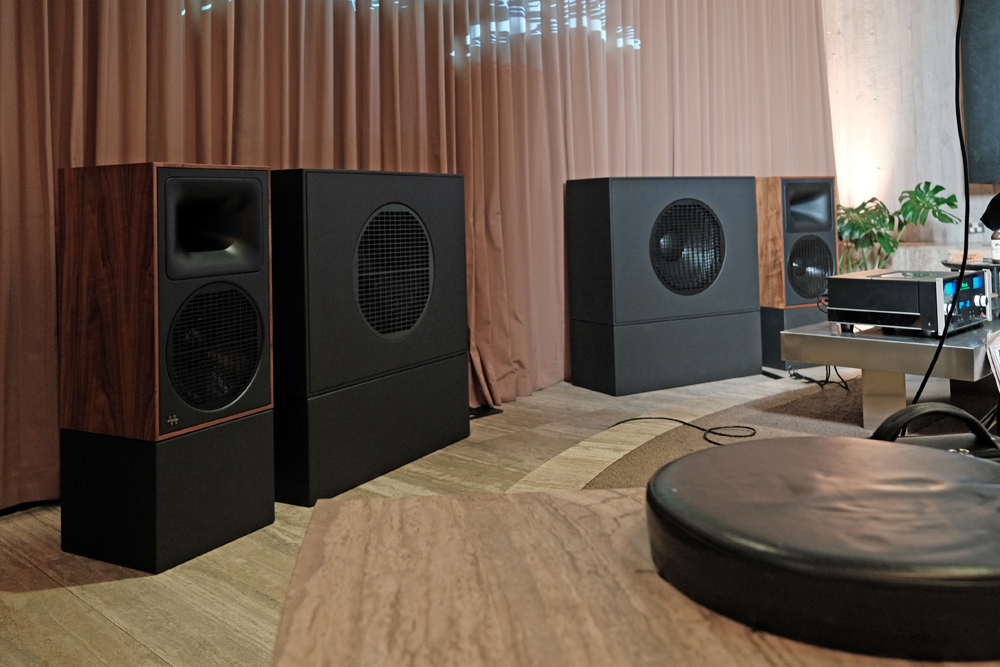
Beastly Number One
For the music sessions in the Kirin Ichiban Penthouse Listening Room, Gilles prepared a short playlist that traced key moments in his musical journey and shaped his career. He is a storyteller and music is his canvas.
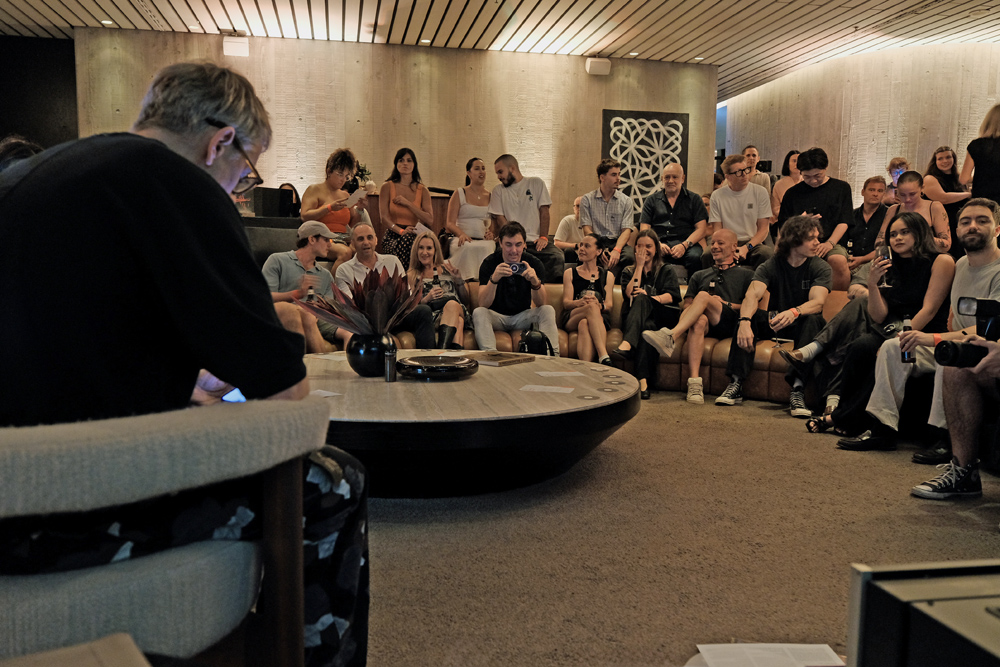
So yeah, the music spans eras of eclectic musical styles/genres, ranging between ambient electronica, to funky jazz, to soul. There are rarities from Lonnie Liston Smith & The Cosmic Echoes, Gary Wilson and many others. The listening is split into a number of sessions, each of 20 or 30 music lovers (I want to say attendance is close to a couple of hundred, total).
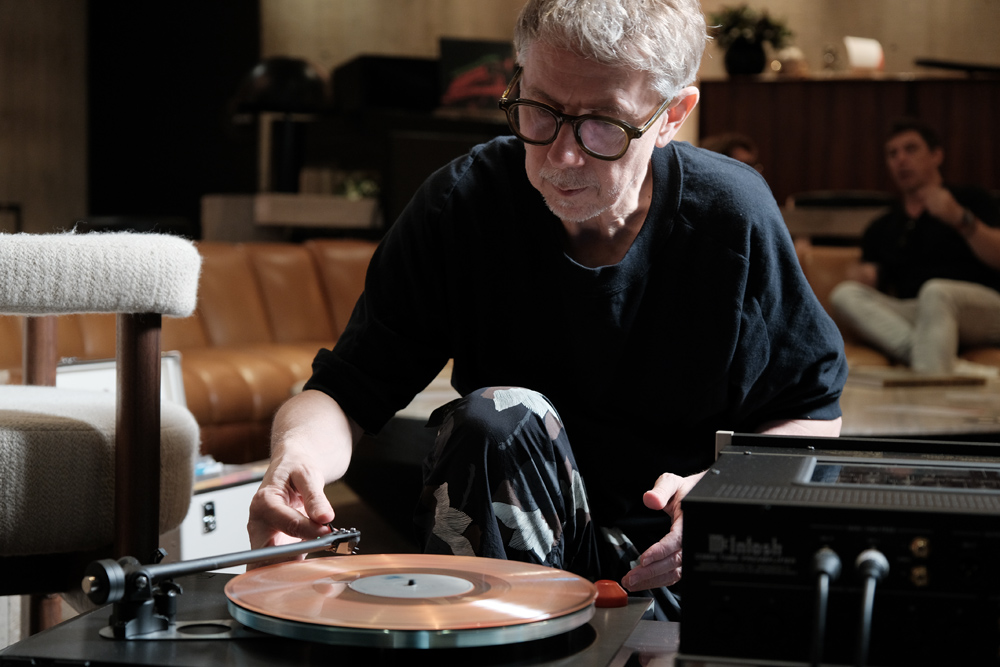
As we progress through the playlist, it’s become evident that, despite the age of some of the material played, the sound system delivers many of the qualities described by Atlas. There’s that much-desired dynamic contrast, that effortlessness in the reproduction of vocals and instruments that demand control and expressiveness. Obsessive imaging focus and ethereal spatial qualities are not a focus here… this is an audience engaging in pure musical enjoyment. The minutiae be damned.
Conclusion
Looking back, I leave this stimulating event with a nuanced appreciation of DJ culture and with a clearer window to the younger audience who appreciates, and are indeed captivated, by the music and Gilles’ musical perspectives.
I’m also impressed by the sound achieved by Atlas Gouverneur and Jack Sarkissian from Synergy Audio. It shows that big, powerful sound can also be refined and engaging in an alternate way.
Kudos too to the organisers, Scrabble PR, Ivy and the Kirin Ichiban Listening Room. As far as this writer is concerned, in many ways the event was quite… energising. And I should add, promising. Here’s a new generation of music lovers who just might, one day soon-ish, turn into ardent audio enthusiasts.
… Edgar Kramer
This email address is being protected from spambots. You need JavaScript enabled to view it.
Gilles Peterson
https://gillespeterson.net/
Atlas Harmonic
https://www.atlasharmonic.com/
Synergy Audio
+61 (03) 9459 7474
https://www.synergyaudio.com/
Ivy Penthouse – Kirin Ichiban Listening Room
+61 (02) 9240 3000
https://merivale.com/event-planning/event-spaces/ivypenthouse/
Gallery